The challenge: the "grey zone" of connectivity
For utilities deploying smart water meters, network reliability is paramount. However, many meters are installed in challenging environments - deep underground, in pits, or in basements that effectively block or weaken radio signals. These 'grey zones' are a major source of data loss, network instability which eventually increase operational costs.
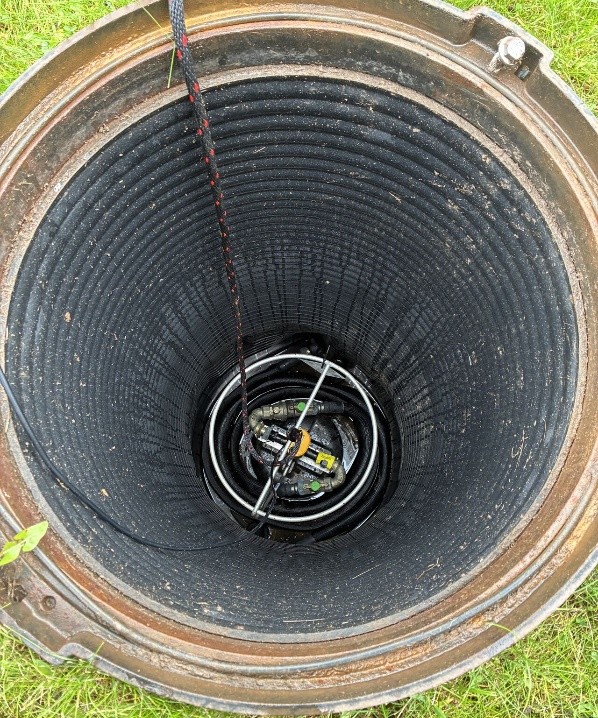
This case study, conducted in Sweden together by Axioma Metering and its local partner, examines a common 'grey zone' scenario: a Qalcosonic W1 water meter installed in a 2 meter deep manhole, obstructed by a 40mm thick metal lid.
Qalcosonic W1 water meter, using LoRa (LoRaWAN) communication, was struggling. LTE tower indicated Received Signal Strength Indicator (RSSI) of -110 dB. At this level, the signal was weak, on the verge of being lost, and data "telegrams" were failing to reach the network gateway reliably.
The solution: moving the signal
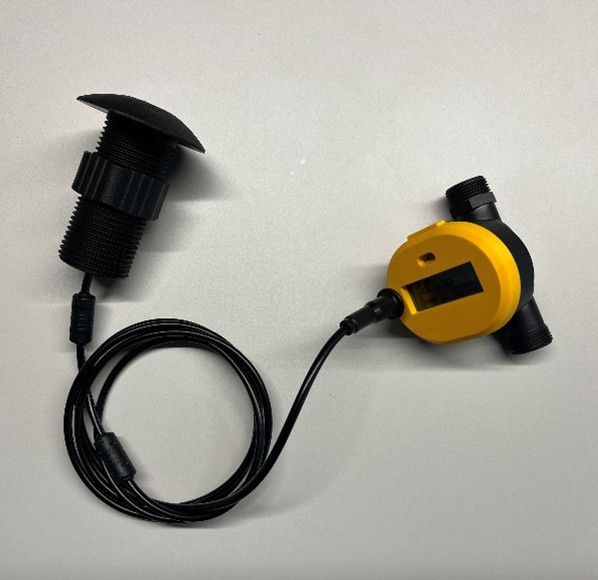
To solve this, we tested the external antenna, an accessory device specifically designed to transfer the signal source from obstructed locations to the open air.
The external antenna operates passively through magnetic coupling, meaning it requires no external power supply. For this test, a pit-type external antenna with a 5-meter cable was used.
The installation process was as follows:
- A cover lid component, that houses the magnetic coupler, was attached directly on top of the Qalcosonic W1 meter at the bottom of the pit.
- The 5-meter cable was then run up the side of the manhole.
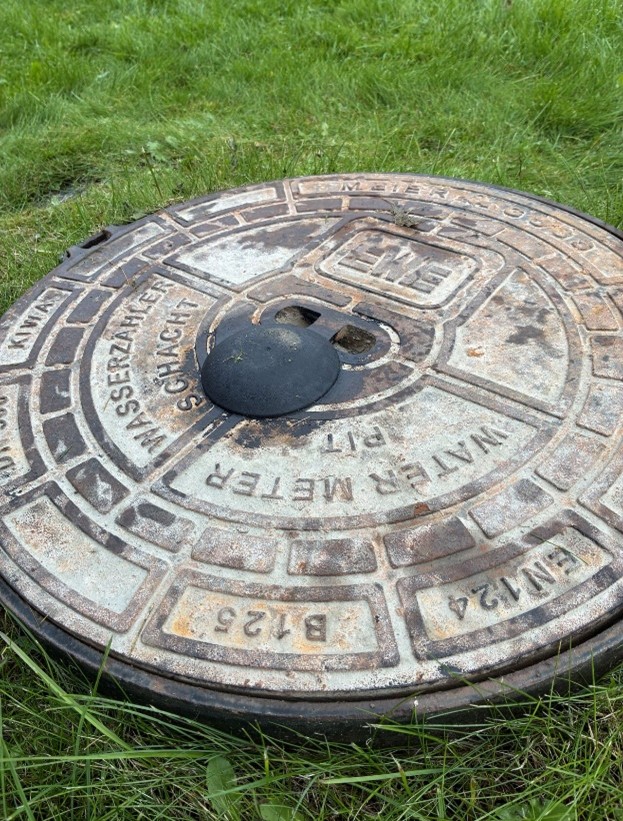
- Finally, the pit-type antenna head, which is fully IP68-rated and weatherproof, was mounted on top of the manhole lid, ensuring it had a clear path for signal transmission.
Thanks to the pre-fitted cable and plug-and-play cover lid, the entire setup by an experienced technician took approximately 3 minutes given that the manhole cover did not require any drilling.
The result: a 100x signal improvement
After installing the External Antenna, the RSSI was measured again from the same location. The signal strength had jumped from -110 dBm to -90 dB.
- Before: -110 dB (weak, unreliable connection)
- After: -90 dB (strong, stable connection)
This 20 dB improvement is a huge gain. In radio frequency terms, a 10 dB increase represents a 10-fold increase in signal strength. Therefore, a 20 dB jump represents a 100-fold increase in signal power, moving the meter from a "grey zone" liability to a highly reliable network asset. The meter's data telegrams were immediately able to reach the gateway without any problems and thus 'green light' status has been achieved.
Analysis & conclusion: a cost-effective fix
This real-world test highlights two critical findings for utilities:
- Solution for weak signal zones: the external antenna solves the "grey zone" connectivity issue for meters in deep or obstructed locations. It moves the signal source from the meter itself to free air, bypassing the obstruction and ensuring data consistency.
- Cost effectiveness: the primary benefit is the long-term operational savings. By restoring reliable connectivity, the external antenna eliminates the need for repeated, costly manual readings. In high-cost markets, a single technician visit will most likely cost more than the external antenna itself.
In short, the external antenna is an investment that eliminates costly manual interventions, ensuring consistent data transmission for the duration of the meter lifetime.